When To Move Baby From Carrycot to Pushchair
As your baby grows up, you make many changes. You start buying larger clothes, setting new routines, and changing how you travel together. One of the major transitions in those early months is switching from a carrycot to a pushchair.
While it might seem like a simple gear swap, it actually marks a huge milestone in your baby’s development. However, knowing exactly when to make that switch can be a bit confusing, especially with so many opinions out there.
The truth is, the answer to when to move baby from carrycot to pushchair isn’t as direct as you might expect. In this article, we’ll help you recognise the signs that your baby is ready. We’ll also go over important safety considerations to help make the transition smoother for both of you.
Why a Baby Should Start in a Carrycot
A carrycot is a snug, flat sleeping space for your baby that attaches to a pram frame. It’s like a mini crib for when you’re out and about. It’s also easy to use and creates a little space that feels familiar and comforting for your newborn.
Some kinds are even safe for overnight sleeping, which can be quite handy for travel.
For newborns to grow healthily, lying on a flat surface is essential. You see, their spine is still developing, and they don’t yet have the core strength to support their heads or sit up.
Lying flat also helps babies with breathing and makes sure their airways stay open. That’s especially important during naps on the go.
At such an early stage, a carrycot should be your go-to choice.
When To Move a Baby From a Carrycot to a Pushchair
Principally, there’s no specific age at which we can say a baby is ready to move from a carrycot to a pushchair. It varies from one child to another. For most babies, this switch can happen between the ages of four and six months.
That said, instead of focusing on the age, pay attention to the following signs that show that your baby is ready for the transition. As long as the pushchair is suitable from birth or offers enough support, you can make the change when the signs start to show.
- Head Control: When babies start to be able to hold their heads up steadily without support, they become ready to sit in a more upright position than before.
- Interest in Sitting Up or Looking Around: If the carrycot suddenly seems boring and your baby keeps trying to pull up or twist around to see what’s going on, it’s a good sign to consider making the transition.
- Outgrowing the Carrycot: Most carrycots have a weight or length limit, usually around 9kg. If your baby starts to feel cramped or bump into the sides, it’s likely time for the next stage.
- Fussiness: Some babies start to get upset lying flat in a carrycot even before reaching the size limit. If your little one seems uncomfortable in that position, try the pushchair, especially if it has a suitable recline option.
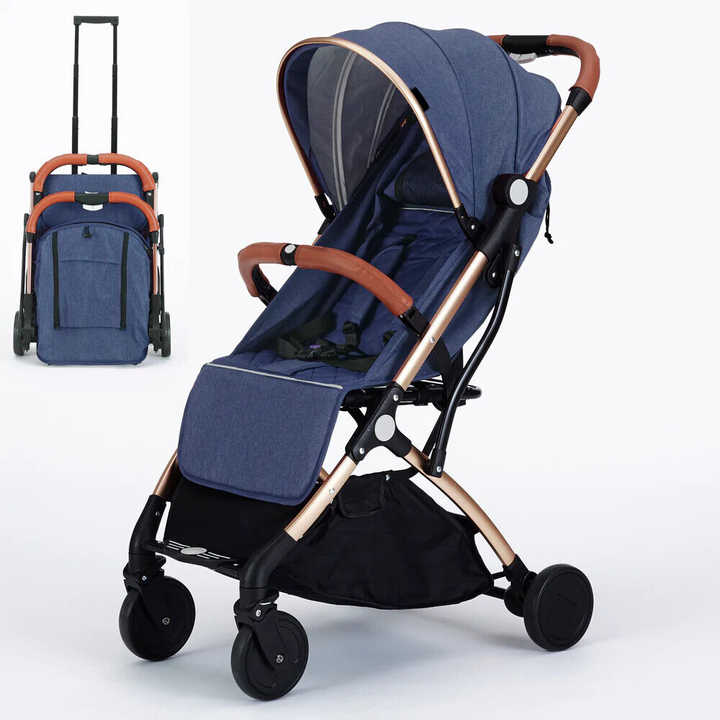
Nexus EasyGO Compact Travel Stroller
Why It Varies From One Baby to Another
Babies grow and develop at varying paces. That’s why the transition from carrycot to pushchair can happen at different times for different little ones. Some become ready to sit up and look around quite early, while others are completely fine with lying flat for a bit longer.
Muscle strength, head control, size, and even personality all play a role in determining the readiness of your baby. A bigger baby may outgrow the carrycot sooner, or a curious one might get bored lying flat earlier.
Overall, what matters most is observing the signals your baby is giving. If staying in a carrycot seems fine, there’s no need to rush things.
How To Choose the Right Pushchair
When it’s time to move on from the carrycot, choosing the right pushchair can make a huge difference. In general, there are hundreds of options in the market, each with a set of different features.
Check out these tips on how to choose the pushchair that suits your lifestyle and your baby’s needs:
- If your baby isn’t sitting up confidently yet, choose a pushchair that reclines fully.
- Make sure the seat provides proper support for your baby’s head, neck, and back.
- For safety, ensure the pushchair comes with a 5-point harness and a soft-padded seat.
- Choose a compact, lightweight brand if you prioritise easy storage.
- Go for a heavier, more sturdy option if you favour durability.
- Consider where you live (bigger wheels are great for rough paths, while lightweight models are handy for city living or travel).
- Pick a model that can turn into a toddler seat later on if you want something that lasts longer.
- Pay attention to storage spaces, especially if you go out a lot for long periods.
- If possible, test the pushchair in-store before buying it (check how easy it is to fold, store, and lift).
Tips for Easier Transition
Moving your baby from a carrycot to a pushchair is a big step that may take some time to get used to. To make it a smoother experience for both of you, consider the following tips:
- Transition Gradually: Start with short trips and quick walks to help your baby get used to the new seat.
- Use the Recline Feature: If your baby isn’t sitting upright confidently yet, keep the pushchair seat in a semi-reclined position at first.
- Make It Cosy: Use a soft liner or footmuff to keep the seat snug and warm, especially if your baby is used to the enclosed feeling of a carrycot.
- Bring a Familiar Item: A favourite toy or blanket can help your baby feel more secure in the new seat.
- Take Your Time: Don’t rush things. If your baby isn’t quite ready, it’s okay to switch back and forth between the carrycot and pushchair for a while.
Conclusion
Knowing when to move baby from carrycot to pushchair can feel like a bit of a guessing game. Yet, you don’t need to worry much about it, as it comes down to your little one’s comfort and readiness.
Look out for the signs, follow the lead of your baby, and don’t stress if the timing looks a little different from others. With the right pushchair and a gentle transition process, your baby will be happily enjoying the ride in no time.
Shop Best Sellers
-
-
Sale!
- Select options This product has multiple variants. The options may be chosen on the product page
£199.00Original price was: £199.00.£149.00Current price is: £149.00.Rated 0 out of 5 -
- Select options This product has multiple variants. The options may be chosen on the product page
-
- Select options This product has multiple variants. The options may be chosen on the product page