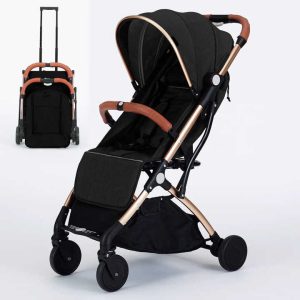
Do note that these measurements include the wheels. British Airways’ baggage policies also require strollers to be a specific design. It should be single carry, slimline, and collapsible to be admitted onboard without extra fees.
Look for a buggy with a quick and simple folding mechanism. No parents enjoy juggling with a clunky stroller while carrying an energetic toddler!
Secure Seat and Recline Options
Airline rules aside, you want to ensure your child is comfortable throughout your journey. And despite their compact designs, many cabin-approved pushchairs offer reclining seats you can adjust to various positions.
This feature provides more versatility during travel, and is especially important for newborns who need flat surfaces for naps.
Check if the seat has sufficient padding to handle your kid’s weight. A five-point safety harness is a plus. This protective harness secures your child’s shoulders and hips to the stroller, shielding important body parts in case of a crash.
Manoeuvrability and All-Wheel Suspension
Of course, your comfort is just as important. If you plan to do a lot of walking, a pram with excellent manoeuvrability and all-wheel suspension will serve you and your child well.
Still, this usually depends on the terrain. Small wheels may be sufficient for most urban settings. But if your destination involves walking over various surfaces, robust, larger wheels would provide better stability.
An all-wheel suspension is a superb feature that offers shock absorption on all four of the buggy’s wheels. It’s smoother and more stable than basic strollers, even on bumpy terrains, ensuring your baby’s comfort.
Other Buggy Features You Should Look For
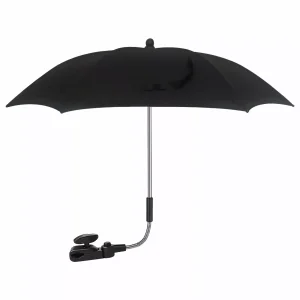
A sunshade or canopy is a fantastic addition to protect your child from harsh sunlight. Some brands also have convenient storage pockets for keeping essentials like diapers, snacks, and small toys.
Other collapsible pushchairs come with a travel bag or strap. This little bonus will be incredibly handy for protecting and transporting the buggy when you’re not using it, especially in typically crowded airports.
What to Do Before Boarding
If this is your first time flying with a baby, here’s a quick checklist to tick before boarding to ensure a smooth trip with a pushchair in tow:
✔ Check Airline Carry-On Policies
Baggage requirements vary from one airline to another. So, before booking that flight, always check your airline’s website for their pushchair and carrier policies.
Shop for your buggy with the required dimensions and weight in mind. Otherwise, the item will be checked in with your luggage, and you won’t be able to bring it onboard.
✔ Prepare at Home
Practice folding, unfolding, and strapping the buggy at home for easier use while travelling. Different brands often have different collapsing mechanisms. Learning them on the fly, especially with your hands full, is a recipe for disaster.
✔ Secure Accessories Before Boarding
Many stroller brands come with accessories like cup holders and trays. You should remove these detachable features to prevent loss or damage.
Additionally, use a protective bag or cover to protect your pushchair during transport or when not in use. Many strollers have a free bag, but you can purchase one separately.
✔ Let the Airline Staff Know About Your Pram
Arrive early so you can inform the airline staff about your cabin-sized pushchair. They will often provide a different tag for these special items.
You can typically only use the stroller until you reach the boarding gate. From there, you need to fold the buggy to enter the plane. Secure the mechanism properly for easier storage aboard.
FAQs
When Can You Fly With a Baby?
According to the National Childbirth Trust (NCT), an infant must be at least two weeks old to be permitted to travel by air. However, some airlines may allow babies as young as seven days.
It’s important to remember that travelling increases an infant’s risk of disease exposure. Most experts recommend waiting after your child has received initial immunisations before they can safely fly on a plane.
Can a Baby Safely Sleep In a Stroller?
Yes. A baby can safely sleep in a stroller with a few precautions.
The pushchair’s seat should recline flat for newborn infants to sleep comfortably. If you have a toddler, a seat drop of 120-135 degrees should be sufficient for cosy naps.
Final Thoughts
A holiday with your kids will never not be exciting. But if you have an infant or an energetic toddler to account for, going away can feel like work than vacation.
Having a cabin-approved stroller will take a load off your shoulders. Specifically designed for travelling parents, these pushchairs will make navigating busy airports and destinations easier.